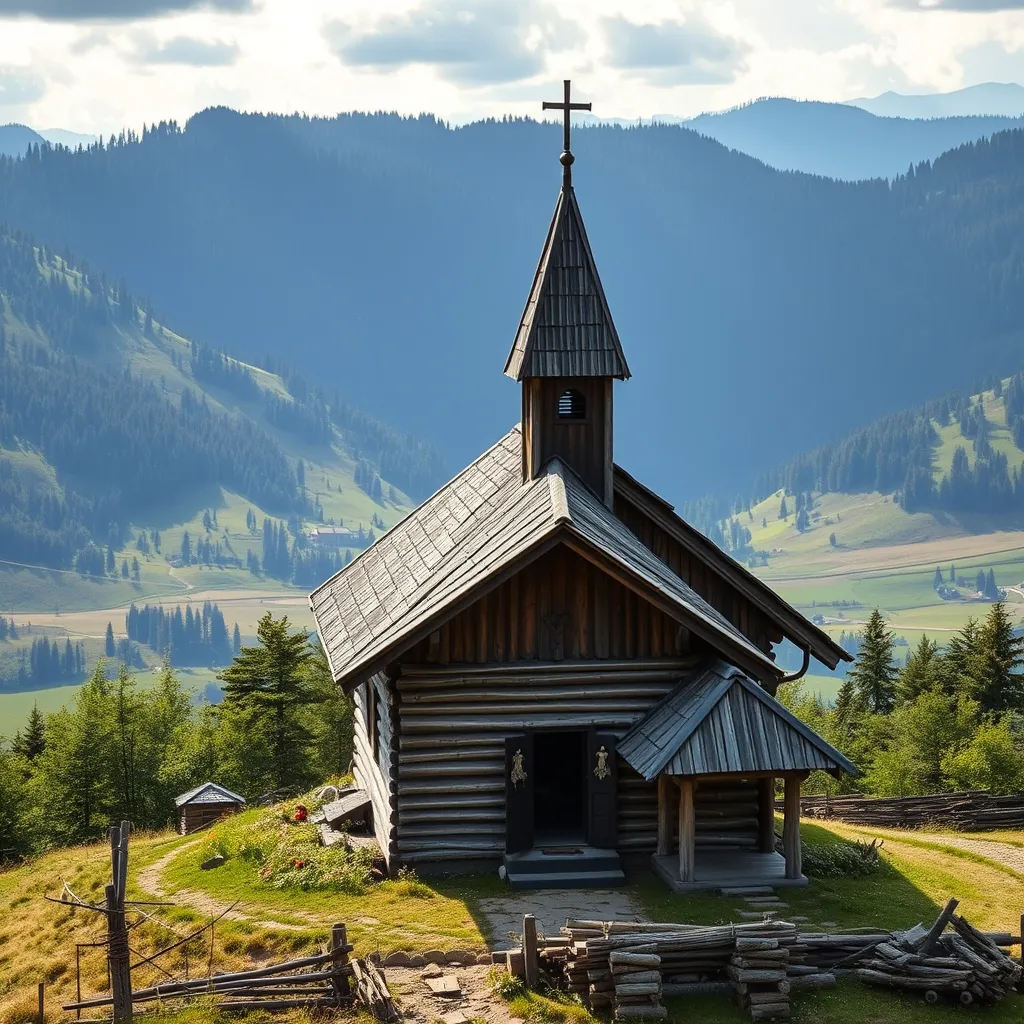
There is a people in the heart of Europe whose ancestors built fortified towns before the Magyars arrived, whose kinsmen helped found the kingdom of Croatia, whose villages stretched from southern Poland to northern Serbia, who Christianized themselves before Kievan Rus was baptized, and who, despite a thousand years of continuous presence in the same mountains, have no country.
They are the Carpatho-Rusyns. And most readers of this article — even many of Carpatho-Rusyn descent themselves — have never heard the fuller version of their own story.
This is not an accident of history. The Carpatho-Rusyn story has been quietly erased many times over — by Hungarian Magyarization in the nineteenth century, by Soviet policy in the twentieth, and even today by Ukrainian and other national narratives that treat Carpatho-Rusyns as a regional subset of some other people. The result is that even Carpatho-Rusyn descendants in North America often inherit only a vague sense of “we came from somewhere in the mountains” without ever learning that they belong to a people with a deep, distinctive, and remarkable history.
This article tells that story. Not as a polemic against any of the neighbors with whom Carpatho-Rusyns have shared a complicated history, but as a positive account of who the Carpatho-Rusyn people are, where they came from, and how they came to inhabit a stretch of Europe far larger than most modern maps suggest. And how the unifying force of the Byzantine Catholic faith — more than anything else — helped unite a people without a nation.
The Mountains and Their Oldest Names
The Carpathian Mountains arc through central Europe for nearly a thousand miles, from the Czech Republic through Slovakia and Poland, across Ukraine, and down through Romania. They are not the highest mountains in Europe, but they are among the oldest continuously inhabited.
The mountains take their name from the Carpi, a Dacian tribe attested in Roman sources from the second through the fourth centuries AD. The Carpi were one of the dominant peoples of the region in late antiquity, raiding Roman provinces along the Danube and giving their name to the entire mountain range that runs through what was once Dacia. They were not Slavic — they spoke a Dacian language related to Thracian. By the time the Slavic ancestors of the Carpatho-Rusyns arrived in the region, the Carpi had largely been assimilated or displaced by the upheavals of the Migration Period.
But the names and areas of settlement remained. The Carpathian Mountains carry within them the memory of these older peoples, and the Carpatho-Rusyns — whose own name is derived from the mountains themselves — inherit, in a sense, the long human history of this landscape.
The Coming of the Slavs
The Slavic peoples who would become the Carpatho-Rusyns arrived in the Carpathian Basin during the great Slavic migrations of the fifth, sixth, and seventh centuries AD. The leading modern historian of Carpatho-Rusyn studies, Paul Robert Magocsi, identifies four distinct ancestor groups whose blending produced the Carpatho-Rusyn people:
- Early Slavic peoples who came to the Danubian Basin with the Huns in the fifth century and with the Avars in the sixth.
- The White Croats (Bijeli Hrvati), a Slavic tribe that inhabited both slopes of the Carpathians and, in the sixth and seventh centuries, built fortified hill-settlements including the one at Hungvar — what is now Uzhorod.
- Vlach shepherds of originally Romanian origin who, between the thirteenth and fifteenth centuries, migrated through the Carpathians and were absorbed into the local Slavic population. So thoroughly were they assimilated that the very word “Vlach” came to mean “shepherd” or “tax-exempt person” rather than indicating a Romanian background.
- Later Rusyn migrants from Galicia and Podolia (in what is now western Ukraine) who, between the twelfth and sixteenth centuries, were invited by the Hungarian crown to settle along the kingdom’s northern Carpathian frontier.
The Carpatho-Rusyns are not, then, the same people as the Rusyns of Kyiv or the Galician Rusyns who became the modern Ukrainians. They share a Slavic origin, a related language, and a Byzantine Christian heritage with their cousins to the north and east — but their ethnogenesis is distinct. They are the product of a particular blending of populations in a particular geography, with a history all their own.
The White Croats and the Founding of Croatia
The most historically prominent of these ancestor groups is the White Croats — and their story is one of the most extraordinary in early medieval Europe.
The White Croats inhabited an area variously called White Croatia (Bijela Hrvatska), Great Croatia (Velika Hrvatska), or simply Chrobatia in the medieval sources. Modern scholarship places this territory across what is now southern Poland, western Ukraine, eastern Slovakia, and northeastern Hungary — substantially overlapping with the historic Carpatho-Rusyn homeland. They organized themselves into a tribal proto-state with fortified centers including Plisnesk, Stilsko, Revno, Halych, and Terebovlia in what is now western Ukraine, and the hill-fort that became Uzhorod in what is now Ukrainian Transcarpathia.
The single most important historical source for the White Croats is the Byzantine Emperor Constantine VII Porphyrogenitus, who in the mid-tenth century wrote a treatise called De Administrando Imperio — “On the Administration of the Empire” — for his son and heir. In it, Constantine describes a migration of White Croats from their northern Carpathian homeland down to Dalmatia in the seventh century, at the invitation (or at least with the encouragement) of the Byzantine Emperor Heraclius. There they fought and defeated the Avars who had been ravaging the Roman province, and they settled the land that became the medieval Kingdom of Croatia.
There is genuine scholarly debate about whether the migration happened exactly as Constantine described — some modern historians think his account is a literary construction rather than a straightforward history. But the broader picture is well-attested: the South Slavic Croats who settled Dalmatia were ultimately of northern Carpathian origin, and they retained for centuries a memory of having come from “White Croatia” in the lands their kinsmen still inhabited.
The implication is striking. The medieval kingdom of Croatia — the kingdom whose name still designates a modern European state — was founded by migrants from what is now Carpatho-Rusyn territory. The Carpatho-Rusyns who stayed home, who never migrated south, are kin to the founders of Croatia. The bond between these two peoples is older than nearly any modern nation in Europe and continues in the memories of modern Carpatho-Rusyns.
The Principality of Laborec and the Slavic Polity Before Hungary
By the ninth century, the Slavic inhabitants of the southern Carpathians had organized themselves into a recognizable polity centered on the fortified town of Hungvar — modern Uzhorod. The settlement had been founded by White Croats in the latter half of the first millennium AD, and by the 800s it had become the center of a Slavic polity. To the west it bordered Great Moravia; to the south, the First Bulgarian Empire of Tsar Simeon the Great, which by the late ninth century had absorbed segments of the surrounding territory.
The ruler of this Carpathian Slavic principality, according to medieval tradition, was a prince named Laborec. The earliest source mentioning him is the Gesta Hungarorum — “The Deeds of the Hungarians” — written around 1200 by an anonymous notary of the Hungarian royal court. According to the Gesta, when the Magyar tribes under their leader Árpád crossed the Carpathians around 895-896 in the conquest that founded the Hungarian state, Laborec opposed them. He was defeated and killed near a river that has carried his name ever since.
Modern historians treat Laborec as a semi-legendary figure. The Gesta Hungarorum was written more than three centuries after the events it describes, and its author’s reliability for specific ninth-century details is uncertain. But two things are not in doubt. First, that some Slavic polity existed in the southern Carpathians at the time of the Hungarian conquest — this is confirmed by archaeology and by the broader historical record. Second, that the memory of Laborec, whatever its historical kernel, has been a foundational element of Carpatho-Rusyn national consciousness for centuries. The river still bears his name. The town of Uzhorod still stands where his principality stood. The story of an independent Slavic Carpathian polity that resisted the Magyar conquest is woven into the fabric of Carpatho-Rusyn self-understanding.
After the Hungarian conquest, the region became part of the Kingdom of Hungary — and would remain so, in various political configurations, for the next thousand years. But the Slavic population did not disappear. The Hungarians settled primarily in the lowlands; the Slavs remained in the mountains and the foothills, preserving their language, their faith, and their way of life across centuries of foreign rule.
Christianization Before Kievan Rus
Christianity reached the Carpatho-Rusyns before it reached most of the lands of Rus. According to longstanding tradition — preserved in the historical records of the Eparchy of Mukachevo itself — the missionary work of Saints Cyril and Methodius in the second half of the ninth century reached the slopes of Carpathian Ruthenia. The two brothers, sent from Constantinople to evangelize the Slavs of Great Moravia in 863, brought with them the Slavonic liturgical tradition and a new alphabet for writing Slavic languages.
When Methodius was driven from Moravia after his brother’s death and after the Frankish-aligned political faction took control, his disciples scattered. Many went south to the First Bulgarian Empire, which had recently converted to Christianity and welcomed the Slavic-language Christian tradition. From Bulgaria, the Slavonic liturgical tradition radiated outward into all the Slavic lands.
The Carpathians were positioned almost perfectly at the intersection of these missionary currents. From the north came the influence of Great Moravia; from the south, the missionary energy of Bulgaria; and the Slavs of the Carpathian region absorbed Christianity in its Eastern, Slavonic form from both directions. By the time Kievan Rus received Christianity under Saint Vladimir in 988, the Carpathian Slavs had already been Christian for at least a century. They were Christians before Kievan Rus.
This matters for understanding Carpatho-Rusyn identity. The Carpatho-Rusyn church is not a daughter of the church of Kyiv. It predates it. The two are sister churches, both rooted in the Slavonic missionary tradition founded by Cyril and Methodius, but the Carpathian church developed in its own context, under its own pressures, with its own institutional history.
The Monastery on the Hill
The institutional center of Carpatho-Rusyn Christianity for most of its history was the Saint Nicholas Monastery on Chernecha Hora — Monk’s Hill — near Mukachevo in what is now Ukrainian Transcarpathia (often referred to in other sources simply as the Mukachevo Monastery). The monastery’s exact founding date is uncertain. Tradition places it as early as the eleventh century, though the earliest surviving documents date from the fourteenth, when the monastery was rebuilt and substantially expanded under the patronage of Prince Fedir Koriatovych of Podolia.
For centuries, the monastery functioned as the spiritual heart of the Carpatho-Rusyn people. In 1491 it became the residence of the bishop of Mukachevo, whose jurisdiction covered all of Transcarpathia. The Saint Nicholas Monastery became, after the Union of Uzhorod in 1646, the principal house of the Greek Catholic Basilian monks in Carpatho-Rusyn territory and continued in this role for three centuries, building one of the most important libraries of religious manuscripts and printed books in central Europe.
In 1946, under Soviet rule, the monastery was forcibly taken from the Basilian Greek Catholic monks. The thirty-three monks then living there were given the choice of converting to Russian Orthodoxy or being exiled; they refused conversion and were expelled. The monastery’s library of more than six thousand rare books and manuscripts was confiscated and dispersed, never to be returned. The buildings were given to the Russian Orthodox Church, and the monastery was reorganized as a women’s convent under the Moscow Patriarchate.
After the fall of communism and the restoration of religious freedom in 1989, many Greek Catholic properties across Eastern Europe were returned to their original owners. The Saint Nicholas Monastery was not among them. It remains under the Moscow Patriarchate to this day. For the Carpatho-Rusyn Greek Catholic community, this is an ongoing wound — the historic spiritual center of their people, the home of their saints and the keeper of their tradition, held by a church that does not represent them and refuses to give it back. The story of suppression is not just a story of the past for the Carpatho-Rusyns. It continues to this day.
The Long Medieval Silence
Between the Hungarian conquest of the late ninth century and the Union of Uzhorod in 1646, the Carpatho-Rusyns lived without a state of their own. Their lands were divided among neighboring powers. South of the Carpathian crest, they belonged to the Kingdom of Hungary. North of the crest, in the Lemko region, they belonged to Poland after the fourteenth century. In the east, the Maramures Rusyns inhabited a region that passed between Hungarian, Wallachian, and eventually Romanian rule.
But the absence of a state should not be confused with the absence of a people. Throughout these centuries, the Carpatho-Rusyns maintained their language, their Byzantine Christian faith, their village institutions, and their distinctive culture. The Vlach colonization of the thirteenth through sixteenth centuries enriched the population with new pastoral traditions. The arrival of Galician Rusyn settlers at the invitation of Hungarian kings added to the demographic mix. The Mongol invasion of 1241-1242 devastated the lowlands but largely passed over the mountain villages. The Ottoman wars of the sixteenth and seventeenth centuries reshaped the politics of central Europe but did not displace the Carpatho-Rusyn people from their homeland.
What was missing throughout this period was a national consciousness. The Carpatho-Rusyns were a people, but they did not yet think of themselves as one. They were villagers in the mountains, faithful Christians of the Byzantine rite, subjects of distant Catholic kings. National identity, in the modern sense, would come later — and when it came, it would come through the church.
The Union of Uzhorod as Unifying Force
The single most important event in shaping a unified Carpatho-Rusyn national consciousness was not a battle, not a treaty, and not a political revolution. It was a church union.
The Union of Uzhorod in 1646 brought sixty-three Carpatho-Rusyn Orthodox priests into communion with Rome, creating what would become the Ruthenian Greek Catholic Church. The institutional history of that union is told elsewhere on this blog. What matters for the present article is the identity-forming effect that the union eventually had.
In the first century after the union, its impact was limited. Due to external political pressure — by occupying Muslim Ottomans and their collaborating Calvinists in Transylvania — many Carpatho-Rusyn villages were slow to accept it, and the institutional infrastructure of the new Greek Catholic Church was thin. But over the eighteenth century — particularly under the reforms pushed by Empress Maria Theresa, which led to Pope Clement XIV recognizing the Eparchy of Mukachevo as a fully independent diocese in 1771, and after the establishment of a Greek Catholic seminary in Uzhorod a few years later — the Greek Catholic Church became the central organizing institution of Carpatho-Rusyn life. The bishop of Mukachevo became, in effect, the only figure with authority over the entire Carpatho-Rusyn people across the political boundaries that divided them.
In 1818, the Eparchy of Prešov was established to serve the Carpatho-Rusyns living in what is now eastern Slovakia. In 1777, the Eparchy of Križevci was established to serve the small but significant Rusyn community that had migrated south to Bačka in what is now northern Serbia. By the early nineteenth century, a network of Greek Catholic eparchies spanned the entire range of Carpatho-Rusyn settlement — and through this network, a unified Carpatho-Rusyn identity began, for the first time, to crystallize.
The defining marker of that identity was the Greek Catholic faith. Before the union, a Carpathian peasant in a village north of the mountains and a Carpathian peasant in a village south of the mountains might have shared a language, a culture, and an Orthodox confession — but they had no institutional reason to recognize each other as belonging to the same people. After the union, the network of Greek Catholic eparchies, the shared seminary at Uzhorod, the shared monastery at Mukachevo, and the shared liturgical tradition gave them a common framework. They were Greek Catholic. They were not Latin Catholic, not Russian Orthodox, not Magyar Calvinist. They were something specific, and that something was the seed of a national identity.
The Fullest Extent
This is where it becomes important to correct a common modern misconception. Many narratives about Carpatho-Rusyns today treat the people as essentially equivalent to the two surviving eparchies — Mukachevo in present-day Ukrainian Transcarpathia and Prešov in present-day eastern Slovakia. The map is drawn small, and Carpatho-Rusyn history is presented as the history of those two regions.
The reality is considerably larger.
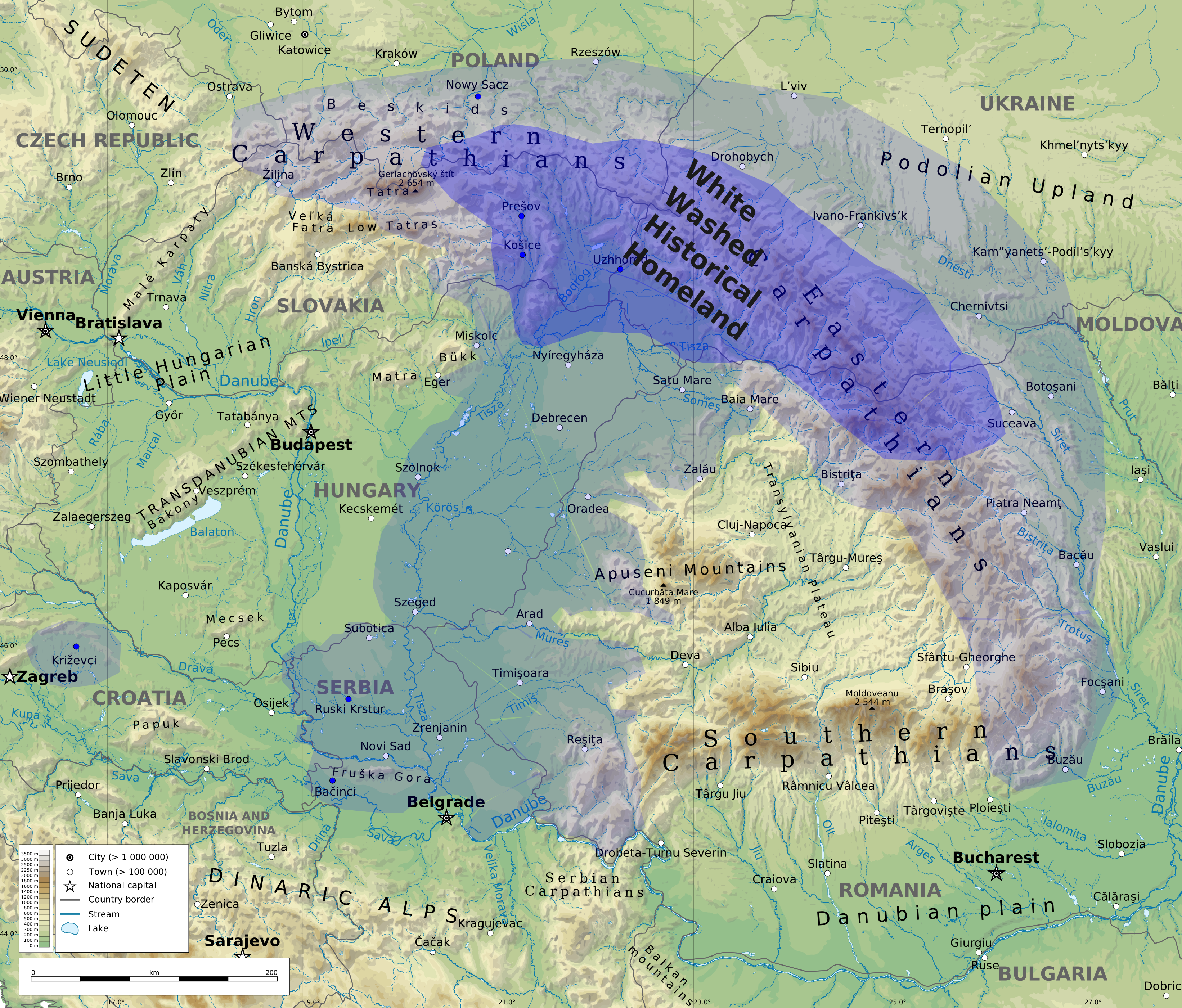
According to the Carpatho-Rusyn Research Center’s authoritative Carpatho-Rusyn Settlement: A Map and Gazetteer, 1,455 villages and towns across central Europe had Carpatho-Rusyn majorities at the beginning of the twentieth century. The total geographic footprint, before the great twentieth-century erasures, spanned a region far larger than what modern maps suggest:
- Ukraine — the Transcarpathian Oblast (historic Subcarpathian Rus), where roughly three-quarters of Europe’s Carpatho-Rusyns still live today.
- Slovakia — the Prešov Region in the northeast, with its historic center at Prešov and a network of Greek Catholic parishes and monasteries throughout. The 2021 Slovak census still counted over 63,000 self-identified Rusyns.
- Poland — the Lemko Region along the northern slopes of the Carpathians from the Dunajec River in the west to the San River in the east. The Lemko Rusyns had inhabited these villages for at least eight centuries before being violently deported by the Polish communist government in 1947 under Operation Vistula, which scattered them across the formerly-German “recovered lands” of Silesia and Pomerania, hundreds of miles from their ancestral homeland.
- Romania — the Maramures region along the upper Tisza valley, where villages like Ruscova, Repedea, and Poienile de sub Munte still have Rusyn majorities (Repedea alone has roughly 4,500 Rusyn residents). The Bixad Monastery in northwest Romania has been a Greek Catholic spiritual center since the eighteenth century — although now it is an unreturned property inhabited by the Orthodox.
- Hungary — northeastern Hungary, where as late as 1806, over 200 villages still had Rusyn-speaking majorities. Most of these communities were thoroughly Magyarized over the nineteenth century — a story we’ll return to — but the historic presence of Carpatho-Rusyns deep inside what is now Hungary is documented and undeniable.
- Serbia — the Bačka region of Vojvodina, the southern frontier the Rusyn migration had reached by the 1740s. This was not an accident of geography. The Treaty of Karlowitz (1699) had returned the long-depopulated lands south of the Carpathians to Habsburg rule after a century and a half of Ottoman warfare, and the imperial administration actively recruited settlers from the overcrowded northern uplands — Rusyns prominent among them — to repopulate the empty plains. The migration unfolded across decades, and by the 1740s its leading edge had reached as far south as modern Vojvodina. The town of Ruski Krstur founded its first Greek Catholic parish there in 1751 and a Rusyn-language school in 1753 — a school that has run continuously for more than 270 years. The Bačka Rusyns developed their own distinctive Pannonian Rusyn dialect and an active cultural life that continues today; in 2018, a separate Greek Catholic Eparchy of Ruski Krstur was established specifically for them. Many Carpatho-Rusyns in North America still hold the Serbian connection in special affection — it represents one of the oldest and most successful continuations of the Rusyn people south of the Carpathians.
- Croatia — Rusyn settlements in eastern Slavonia, served by the Greek Catholic Eparchy of Križevci. The Croatia connection has a particular poignancy: it returns the descendants of the Carpathian Slavs to the very land that their kinsmen, the White Croats, had migrated to a thousand years earlier.
- Czech Republic — through the Vlach shepherd migrations, Carpatho-Rusyn cultural influence reached as far west as Moravian Wallachia, where pastoral traditions and folk culture still bear the marks of the migrations from the Carpathians.
The Carpatho-Rusyn cultural world, at its peak, stretched from the Czech Republic to Serbia, from southern Poland to northern Romania. It overlapped with seven modern nations and influenced an eighth. The narrative that confines Carpatho-Rusyns to a small territory in Transcarpathian Ukraine and eastern Slovakia is a post-deportation narrative — true only if you accept the borders drawn by the violence of the twentieth century as the natural state of things.
Magyarization and the Missed Nation
The Carpatho-Rusyn national awakening that the church union had set in motion was just beginning to bear political fruit in the early nineteenth century when it ran into the most dangerous adversary it would face: the modern nation-state.
In 1867, the Austrian Empire restructured itself into the Austro-Hungarian Dual Monarchy through the Ausgleich or “Compromise.” Hungary received broad autonomy in domestic affairs, including the authority to manage its own minorities. There was a problem, however: the Kingdom of Hungary was not, in 1867, majority Hungarian. The Magyars constituted only about 40 to 45 percent of the population. The remaining majority was Slovak, Romanian, Croatian, Serbian, German, Carpatho-Rusyn, and Jewish.
The Hungarian government’s response to this demographic challenge was a sustained policy of Magyarization — an aggressive program of cultural and linguistic assimilation aimed at transforming non-Magyars into Magyars within a generation or two. Schools were Magyarized. Place names were changed from Slavic to Hungarian forms. Greek Catholic clergy were pressured to conduct services and education in Hungarian. The Slavic press was harassed and shut down. Mixed-language children were systematically educated only in Hungarian. By the early 1900s, the spontaneous assimilation that had occasionally produced Magyarized Rusyn families in the eighteenth century had become a systematic state policy, executed with bureaucratic thoroughness.
The Carpatho-Rusyn awakening that had begun with figures like Mykhailo Luchkai and Ivan Churhovich in the 1830s, that had built schools and printed newspapers and organized cultural societies through the 1850s and 1860s, was actively dismantled in the decades after 1867. The Greek Catholic Bishop of Mukachevo from 1867 to 1874, Stefan Pankovych, was a pro-Hungarian loyalist who deliberately suppressed Rusyn cultural activities under his jurisdiction. Many of the Carpatho-Rusyn villages of northeastern Hungary lost their Rusyn language within a generation. By the eve of the First World War, a substantial portion of the Carpatho-Rusyn population in Hungary proper had been culturally Magyarized — registering on censuses as Hungarian, speaking Hungarian at home, attending Hungarian-language schools, even if their grandparents had spoken Rusyn and their churches still celebrated the Divine Liturgy in Old Church Slavonic.
The tragic timing is this: Magyarization peaked in the years immediately before the First World War. When the Habsburg Empire collapsed in 1918 and the new national borders of central Europe were drawn at Versailles, Trianon, and Saint-Germain, the Carpatho-Rusyns lacked the institutional strength and the demographic clarity to claim their own nation. The Czechs got Czechoslovakia. The Poles got Poland. The Romanians got an expanded Romania. The South Slavs got Yugoslavia. The Carpatho-Rusyns were divided among these new states — with a much diminished rump semi-autonomous state called Subcarpathian Rus within Czechoslovakia, with the Lemko region awarded to Poland, the Maramures Rusyns to Romania, and the Bačka Rusyns to Yugoslavia.
A generation earlier, before Magyarization, the Carpatho-Rusyns might have argued for their own state, or at least for a strong autonomous region. By 1918, the cultural ground had been cut out from under them. They had no metropolitan center comparable to Prague or Warsaw or Belgrade. They had no organized political movement of national scale. They had a church, they had a language, they had villages, they had memory — but they did not have a nation.
The Story Goes On
The twentieth century brought new disasters to the Carpatho-Rusyns: the brief existence and absorption of Carpatho-Ukraine in 1939, the Hungarian reoccupation, the Soviet annexation in 1945, the systematic liquidation of the Greek Catholic Church in 1949, the forced deportation of the Lemko Rusyns in 1947, the official Ukrainian non-recognition of Carpatho-Rusyn identity through the entire Soviet period and beyond. These are subjects for future articles.
What matters for this article is the deeper story that underlies all those events. The Carpatho-Rusyns are not a recent invention. They are not a regional offshoot of some other people. They are a Slavic people of the Carpathian Mountains with their own ancient origins, their own pre-Hungarian polity, their own missionary history, their own thousand-year continuous presence in the same mountains, and their own remarkable geographic reach across central Europe.
They Christianized themselves before Kievan Rus. They founded a polity at Uzhorod before there was a Hungary. They have outlasted the Avars, the Magyar conquest, the Ottoman wars, the Magyarization campaign, the Nazi occupation, the Soviet liquidation, and Operation Vistula. They remain.
The Carpatho-Rusyn people in the twenty-first century are smaller than they were a century ago, and smaller than the historic territories they once filled. But they are still here — in Mukachevo and Prešov and Ruski Krstur and Maramures, in Pittsburgh and Cleveland and Toronto and the steel towns of western Pennsylvania, in scattered villages from Silesia to Slavonia where the deportations sent their grandparents.
And in those American parishes especially, the multi-ethnic melting pot mentality of the historic Carpatho-Rusyns — themselves mutts of Slav, Croat, Avar, Vlach, and Galician Rusyn descent — has found new life. The Byzantine Catholic Church in America has become a truly multi-ethnic church, with people of all backgrounds and walks of life. It is this legacy — the unifying force of faith — more than anything else that has come to define a people without a nation.
A people without a nation. A Church open to all.