If you visit a Byzantine Catholic parish in America today, you may notice something curious: a few blocks away, there might be another Eastern Catholic parish, full of icons and chant just like yours, but answering to a completely different bishop, with its own ethnic culture, its own seminary, its own story. Maybe it’s a Ukrainian Greek Catholic parish. The two share most everything liturgically — and both are in full communion with the Pope — but they have separate hierarchies, separate identities, and separate histories.
Why are there two major Eastern Catholic Churches with roots in the same Slavic-speaking peoples, sharing the same Byzantine Rite, both in communion with the same Pope?
The answer is a three-part story. This series tells it:
- Part 1 (this article) traces the medieval backstory — Florence, the fall of Constantinople, and the four-way splintering of the Rusyn-speaking world by 1460.
- Part 2 tells how the eastern Rusyns under Polish-Lithuanian rule produced the Union of Brest in 1596, and how the catastrophic seventeenth century that followed forged what we now call Ukrainian identity.
- Part 3 tells how the Carpatho-Rusyns west of the Carpathian Mountains were spared from that chaos, how their different experience led to a different union at Uzhorod in 1646 (the union that would eventually produce the Byzantine Catholic Church), and how all of this led to a different cultural identity despite speaking a similar language.
Is It Ruthenian, or Is It Rusyn?
A quick note about terminology that runs through the whole series.
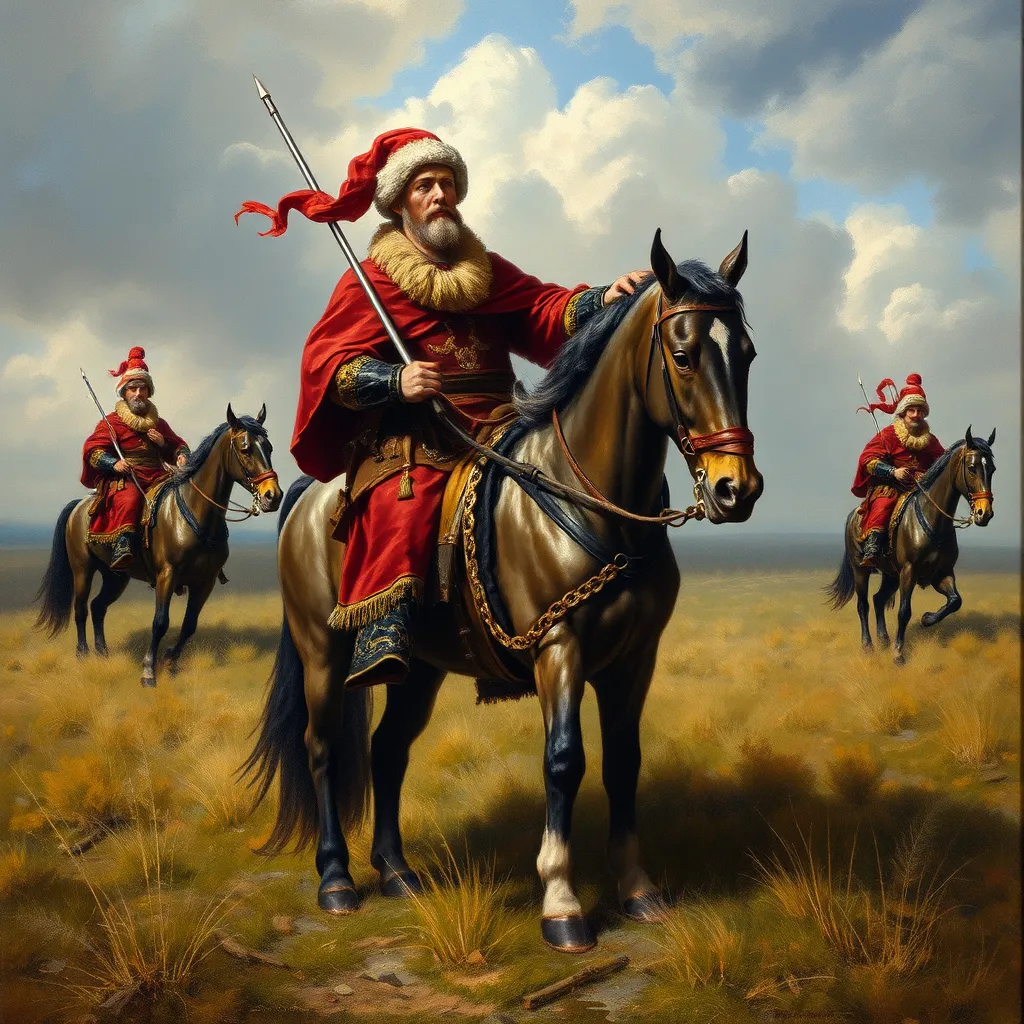
The term Rusyn is not to be confused with Russian, Belarusian, or Ukrainian — all of whom were originally Rusyn-speaking Slavic peoples living roughly in the area that corresponded to the medieval Kingdom of Rus. Similar to how French, Spanish, and Italian all descend from a common Latin ancestor yet formed distinct national identities, these Rusyn-speaking groups — Carpatho-Ruthenians, Belarusians, Russians, and Ukrainians — shared a similar core language and a general cultural background in ancient times, only to diverge into different national identities later on.
The terms Ruthenian and Rusniak are also used; these are simply Latinized Western pronunciations of Rusyn. The term Ruthenian specifically traces back to the medieval Catholic Kingdom of Ruthenia, or “Red Ruthenia,” centered around the cities of Halych and Lviv. As such it became the identifier for this Church and its people, who lived along the western cultural periphery of the Kievan Rus medieval state.
With that out of the way, the story begins almost two hundred years before the union that gives this series its name.
The First Reunion: The Council of Florence
To understand any of the modern Eastern Catholic unions, you have to start with one earlier moment when East and West had already tried, and partially succeeded, in healing the Great Schism.
The Council of Florence ran from 1431 to 1449, with the central act — the Union of Florence between the Greek and Latin churches — signed on July 6, 1439. This was no minor synod. The last Byzantine Emperor, John VIII Palaiologos, was present in person along with the leading clergy of the entire Eastern Church. The goal was nothing short of healing the Great Schism of 1054 while providing urgent military relief to what was now a desperate rump of an empire — at that point reduced to little more than Constantinople, the southern Greek peninsula, and a handful of Aegean holdings.
The resulting union was a carefully word-smithed agreement that favored the Western position on most theological points but allowed the Byzantine theologians enough latitude to preserve their tradition. It was deliberately written to allow for future clarification rather than demanding immediate full conformity. In exchange for the union, the Pope agreed to lead a fresh Crusade to relieve the Byzantine Empire.
This relief came in the form of the Crusade of Varna in 1444, which ultimately failed catastrophically — resulting in the death of the Polish-Hungarian King Władysław III on the battlefield. Yet despite the military failure, the religious union held. Mark of Ephesus, the most prominent dissenter at the council and the only Eastern bishop who refused to sign the union decree, was a minority voice at the time. (His theological objections would become enormously influential after Constantinople’s fall, and he is now venerated as a saint in the Eastern Orthodox Church specifically for this stance.) But while he lived, the union was the dominant position.
The clearest proof of this acceptance: on December 12, 1452, Isidore of Kyiv — a Greek metropolitan who had embraced the union and been made a cardinal — celebrated a unionist liturgy at the Hagia Sophia, the largest Christian church in the world and the symbolic heart of Eastern Christianity. The union, at that moment, was alive and being lived out in the most prominent church in the East.
Five months later, Constantinople fell.
The Fall and the Fracturing
When Constantinople fell to the Ottomans in May 1453, the political support for the union collapsed with it. Pro-union intellectuals and theologians who could escape fled west — many to Italy, where they helped catalyze the Renaissance. Those who remained were systematically marginalized. The Ottomans, with strong political reasons to prevent any spiritual unity between their new Eastern Christian subjects and the Catholic powers of the West, made sure that the Patriarchs and bishops appointed under their rule were firmly anti-union. What had been a minority objection under Mark of Ephesus became, almost overnight, the official line of the Ottoman-administered Eastern Church.
Yet the union did not collapse everywhere, and in the Ruthenian lands specifically it survived for decades after Constantinople’s fall. The clearest evidence is the figure of Gregory the Bulgarian (Hryhoriy Bolharyn), Isidore’s own nephew and his successor. In 1458, while Isidore was still alive and serving in Rome, Gregory was appointed Metropolitan of Kyiv, Halych, and all Rus’ by Patriarch Gregory III of Constantinople — an exile in Rome at the time, but still the canonically recognized Ecumenical Patriarch — and his appointment was confirmed by Pope Pius II. Gregory the Bulgarian thus became the first Metropolitan of Kyiv elected and consecrated specifically as a unionate bishop under the terms of Florence, with the formal blessing of both Rome and Constantinople.
His election was supported by most of the diocesan bishops of the historic Kievan church — Przemyśl, Chełm, Halych, Turów, Volodymyr, Lutsk, Polotsk, and Smolensk all accepted him. Only Moscow and Chernihiv firmly opposed. And in 1467, Patriarch Dionysius I of Constantinople — by now the actual Ottoman-era Patriarch, not an exile — also gave his blessing to Gregory’s appointment, formally stating that Constantinople would not recognize any metropolitan ordained without its approval. The Metropolis of Kyiv remained in communion with Rome throughout Gregory’s reign (1458-1473) and that of his successor, Misail Pstruch (1476-1480), who was likewise appointed by the Pope.
For roughly forty years after the fall of Constantinople, then, the chief bishop of all the Rus’ lands within the Polish-Lithuanian Commonwealth was a unionate metropolitan in full communion with Rome — recognized by both the Holy See and (at least intermittently) the Ottoman-era Ecumenical Patriarchate. The Union of Florence wasn’t just a piece of paper signed in Italy. For the Ruthenian church, it was an actually lived ecclesial reality for nearly two generations.
But the most consequential break had actually begun before the fall. Moscow had never accepted the Union of Florence. When Isidore of Kyiv returned to Moscow in 1441 as a unionist cardinal, the Grand Duke Vasily II had him arrested. In 1448 — five years before Constantinople even fell — the Moscow church elected its own metropolitan, Jonah, without seeking confirmation from Constantinople. This was de facto autonomy, justified by the need to remain pure from the “Latinizing” influence of the official Constantinopolitan hierarchy. After 1453, with Constantinople under Ottoman control, this break became permanent — though it would not be formally recognized as autocephaly by Constantinople until 1589, when the Patriarchate of Moscow was officially established.
And even the Ruthenian unionate continuity that Gregory the Bulgarian had preserved eventually unraveled. After Misail Pstruch’s death in 1480, the Kievan metropolitanate gradually drifted back into Orthodox-only allegiance — weakened by the devastating 1482 sack of Kyiv by the Crimean Tatar khan Mengli Giray (an ally of Moscow’s Ivan III), undermined by the withdrawal of Constantinopolitan support under Ottoman pressure, and pulled steadily toward Moscow’s growing spiritual orbit. By the early 1500s, the Florentine union had become, for practical purposes, a memory rather than a living institution.
Two schisms emerged out of the wreckage:
- Moscow effectively broke from Constantinople, claiming spiritual leadership of all the lands of Rus on the grounds that Constantinople had compromised itself by entering union with Rome.
- The wider Eastern Church, now under Ottoman control, repudiated the Council of Florence and reopened the schism with the West that the Council had healed. This second schism is still not fully healed to this day.
An Awkward Geopolitics
This series of events created an awkward situation for the Eastern Slavic world. Kyiv — the historical seat of all Kievan Rus churches and the spiritual ancestor of every Slavic tradition east of the Carpathians — was not under Moscow’s control. Most of the territory of the medieval Kingdom of Rus was now within the Polish-Lithuanian Commonwealth, organized as the Duchy of Ruthenia. The Grand Duke of Moscow nevertheless claimed that Moscow was the true spiritual successor to Kievan Rus, even though the actual city of Kyiv lay outside his realm. The Rusyns living under Polish rule, for their part, viewed Moscow as an upstart.
To complicate matters further, there were other Rusyn-speaking populations whose situation was different again.
The Kingdom of Galicia, or Red Ruthenia, centered on Lviv and Halych, had existed as a Catholic kingdom in its own right — receiving a royal crown from the Pope in 1253 under King Daniel — after the collapse of the Kievan medieval state in the Mongol invasion. By the 1340s, after a series of civil wars triggered when the last two male heirs of the royal line died in battle, Galicia had fallen under Polish influence and was eventually annexed outright. The region developed a distinctive blended culture, with Polish-speaking Catholics and Rusyn-speaking Orthodox living in close proximity, intermarrying, and cooperating — particularly in defense against repeated Mongol and Tatar raids.
There were still further groups speaking Rusyn variants west of the mountains — reaching into the Tisza River basin, Transylvania, and the southern Carpathians.
By 1460, then, the picture had crystallized into roughly four distinct Rusyn-speaking populations whose histories would now diverge:
- A Moscow-centered group competing with Kyiv for spiritual jurisdiction over the Orthodox Rus east of the Carpathians, who had received Christianity as late as 988 AD.
- A group in the Duchy of Ruthenia within the Polish-Lithuanian Commonwealth, centered on Kyiv. Their nobility and middle class viewed Moscow as an upstart. The region had been heavily devastated by the Mongols, leading to ongoing demographic shifts and an influx of different peoples.
- A group in Red Ruthenia / Galicia, also within the Commonwealth, actively blending with Polish Catholic culture. Much of the Ruthenian nobility here would eventually adopt a Polish identity and become major figures in the Commonwealth. This group would become the nucleus of what is today the Ukrainian Greek Catholic Church.
- A group of Rusyn-speakers in and immediately west of the Carpathian Mountains, mostly falling under the Kingdom of Hungary, which extended into Romania and down into northern Serbia. This group was jurisdictionally and culturally separate from the Rus east of the mountains and had been since the earliest days of Christianization. By the 1600s this group itself would be split — some in Christian Hungary, others under Ottoman overlordship.
What Came Next
Two of those four populations — the Rus of the Duchy of Ruthenia / Red Ruthenia in the Commonwealth, and the Carpatho-Rusyns west of the mountains — would eventually find their own ways to renewed union with Rome. But the conditions under which they got there were so different, and the consequences so divergent, that the resulting churches are still distinct to this day.
The Galician and Kyivan Rus would lead the way, with the Union of Brest in 1596. That story — and the catastrophic seventeenth century that followed it, the wars and migrations and identity formations that turned the eastern Rus into something we’d later call Ukrainian — is what the next article in this series tells.
The Carpatho-Rusyns would follow half a century later, with the Union of Uzhorod in 1646. They came to Rome under very different conditions: not as the Polish Commonwealth’s increasingly desperate Orthodox bishops, but as a small mountain people sheltered from most of the chaos to their east, dealing with a different set of pressures (Calvinist political opposition from Protestant Transylvania, primarily). That story is the final article in this series.
Both unions were echoes of Florence. But the people who answered those echoes — and the worlds they answered from — could not have been more different.