Ask a Western Christian “What is God?” and you will usually get a list. God is all-powerful, all-knowing, everywhere at once, perfectly good, eternal, unchanging. It is a fine list, and every item on it is true. It answers the question by filling in — by saying more and more precisely what God is.
Ask the Christian East the same question and you may get a stranger answer: a careful, deliberate description of everything God is not. Not visible. Not comprehensible. Not containable. Not a being you could find. The East answers by clearing away — by knocking down every idol the mind builds, on the conviction that God is always greater than whatever you just thought.
Neither instinct is wrong. The title of this piece is a play on both, because the whole truth about God needs the yes and the no together — needs us to say boldly what God is, and then to admit, just as boldly, how much of Him that saying leaves out. Get either half alone and you drift into error. Hold both and you are standing, at last, roughly where the ancient Church stood.
Start with the yes.
What God is: everywhere, and in all things
Scripture is not shy about the great attributes. It says them plainly and often.
God is everywhere — there is no square inch of reality He is absent from, no hiding place outside His reach:
“Whither shall I go from thy Spirit? Or whither shall I flee from thy presence? If I ascend to heaven, thou art there! If I make my bed in Sheol, thou art there!” (Psalm 139:7-8)
“Am I a God at hand, says the Lord, and not a God afar off?… Do I not fill heaven and earth? says the Lord.” (Jeremiah 23:23-24)
God is all-knowing — no thought is hidden from Him, no corner of you unread:
“O Lord, thou hast searched me and known me!… thou discernest my thoughts from afar… Even before a word is on my tongue, lo, O Lord, thou knowest it altogether.” (Psalm 139:1-4)
“And before him no creature is hidden, but all are open and laid bare to the eyes of him with whom we have to do.” (Hebrews 4:13)
God is all-powerful — nothing lies beyond His strength:
“Ah Lord God! It is thou who hast made the heavens and the earth by thy great power and by thy outstretched arm! Nothing is too hard for thee.” (Jeremiah 32:17)
And He is not merely powerful over the world from outside it. He is the One in whom it all holds together — the ground under every existing thing, moment by moment: “in him we live and move and have our being” (Acts 17:28); “in him all things hold together” (Colossians 1:17). Take God away for one instant and there is no universe to be absent from. He is everywhere and in all things, the sustaining depth of everything that is.
That is the yes, and it is enormous. Now the first no.
Our God is not a force. In our own moment the great temptation is not to deny God but to dilute Him — to keep a warm feeling about “the universe,” “energy,” “the ground of being,” “something bigger than ourselves,” while quietly draining away everything personal. People will say, I don’t believe in God, but I believe in something ‘out there’. God becomes an It. A field. A vibe. The sum of all things with the lights turned up. This heresy has an ancient name: pantheism — the collapse of God and the cosmos into one, the divine reduced to nature’s own total.
It sounds humble and expansive, and it is neither. It is smaller than the truth. For the God who fills heaven and earth is not the same as heaven and earth; the One in whom all things hold together is not Himself the pile of things being held. Scripture’s God is everywhere in the world and entirely other than the world — present to every atom of it and not to be confused with a single one. Erase that “other than” part of the equation, and you have not honored God by making Him vast. You have lost Him by making Him furniture.
What God is: personal — He knows your name
The pantheist, described above, keeps the everywhere and loses the Someone. Scripture will not let us. The God who fills all things is not an It but a He — one who knows, chooses, speaks, and loves; who is not merely present to you but present as a Person. This is our second yes, God is personal.
The knowing we already saw is the first clue. When the Psalmist says God has “searched me and known me,” he does not mean God holds accurate data about him. He means he is known — the way a beloved is known, down to the unspoken thought. This God calls His people the way you call a person, by name: “I have called you by name, you are mine” (Isaiah 43:1).
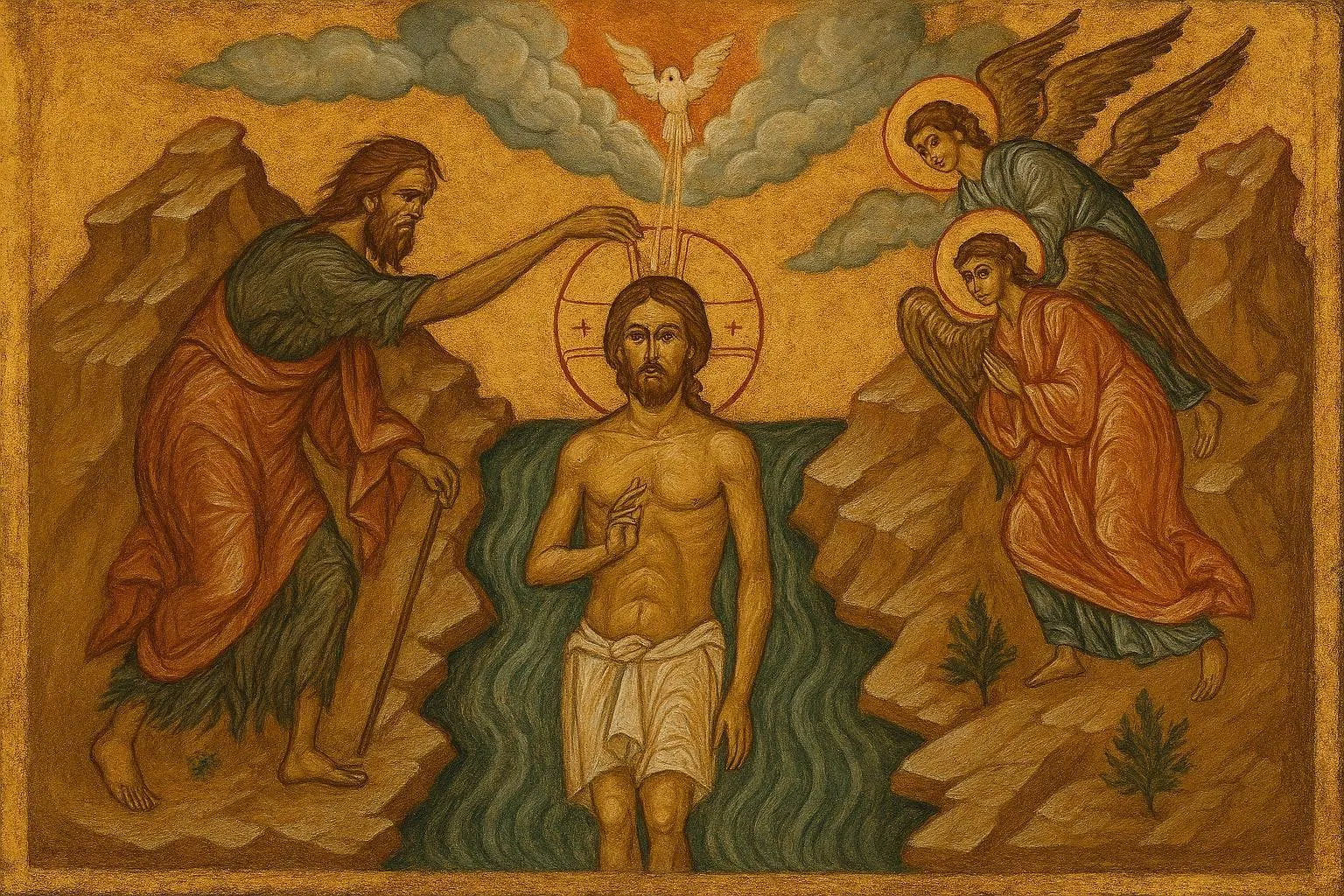
And then He did the most personal thing imaginable. The God no eye can see took a face. “The Word became flesh and dwelt among us” (John 1:14); they called Him Emmanuel, which means “God with us” (Matthew 1:23). The One in whom all things hold together lay as an infant who could be held. Whatever the nature of God is, it is not too grand to know your name, nor too distant to come and find you.
Now the second no — and for this one, open Homer.
Near the start of the Odyssey, the gods hold council on Olympus to decide the fate of Odysseus, and they are free to act for one simple reason: Poseidon, who hates him, is not there. He has gone off “to the Ethiopians, at the ends of the earth,” to feast, and will be away a good while. So Athena seizes the moment while his seat stands empty.
Sit with that image, because it is the whole theology of the pagan gods in miniature. To be here is to not be there. When Poseidon goes to Ethiopia, Olympus loses him; his chair stands empty; the others act behind his back. Those gods are mighty, but they are local — beings in a place, subject to space exactly as we are. A grander sort of creature, not a different sort of being. You could, in principle, find Poseidon. He is always somewhere in particular, and therefore never everywhere.
Our God is not a god with a seat. When He came down to Moses, heaven was not thereby emptied. When He spoke from the burning bush, He had not left somewhere else in order to be there. When the Word became flesh, the Son did not vacate the throne of heaven to fit inside the manger. He has no chair to vacate — because He fills heaven and earth, and the One who fills all places cannot be carried from one to another. The early Church even had to correct believers who slid back toward the older picture — the Anthropomorphites, who imagined God with a local, bodily form, a divine figure in a divine location. To give God a seat is to make Him a creature: bigger than us, perhaps, but bounded like us, here and therefore not there.
Paul knew exactly whom he was correcting when he stood on the Areopagus in Athens — ringed by the temples of those very local gods — and told the philosophers of a God they had groped after and never named: “he is not far from each one of us, for ‘In him we live and move and have our being’” (Acts 17:27-28). Then he quoted their own poets back to them. The thing their myths kept reaching for — a divine presence that is genuinely everywhere — was real after all. Just not in gods with chairs.
So we hold the two halves, and at first they look like they cannot both be true. God is through all things — flee where you like, He is already there. And God is personal — He knows your name and came to find you. The pantheist, especially seen today, keeps the first and loses the second: everywhere, but no one. The Greek pagans kept the second and lost the first: someone, but only ever there. The God of Israel and of the Church is the only One who is both at once — everywhere, and Someone; the seam that runs through all things, and the seam is a Person.
The thing in itself
How can both be true at once? Here we reach the hinge, and it helps to name an old quarrel first.
When people contrast the Eastern and Western minds on the nature of God, they often reach for two Greeks. The West, it is said, thinks about God like Aristotle — God as the supreme being, pure act, the answer at the top of the chain of causes, something the intellect can define and reason its way toward. Scientific, empirical, rational, definable. The East thinks more like Plato — God as the Good beyond being, the unchanging highest form of the Good, too high for the intellect to fully comprehend, approached by ascent and unknowing rather than by definition. It can lead to misconceptions, as all stereotypes can, but it points at something real: a genuine difference of temperament about how far the mind can go.
Rather than referee two ancient Greek philosophies, let’s jump forward two thousand years to a quiet Prussian named Immanuel Kant — because he drew, in plain philosophical terms, the very line the Christian East had been guarding all along. Everything we know of anything, Kant observed, comes to us as appearance or empirical data — the thing as it shows up to our senses and our minds, filtered through the equipment we perceive with. He called this the phenomenon. But behind the appearance stands the thing as it is in its own depths, apart from any perceiving of it — what he called the thing in itself, the noumenon. And the noumenon, he argued, we never reach, because our senses are themselves a limiting factor. We know the world as it gives itself to us; the world as it is in itself stays veiled. A color-blind person perceives green differently than someone with full color vision, for instance — but the wavelengths hitting the eyes are no different.
Now hold that beside what we have been circling, and you will feel the click. Using that same metaphorical philosophical construct, the essence of God is the thing in itself — what God is in the unfathomable depth of His own being, which no created mind will ever net.
Scripture claims exactly this: God “dwells in unapproachable light, whom no man has ever seen or can see” (1 Timothy 6:16); “No one has ever seen God” (John 1:18). Not because He is coy, hiding a face He could reveal at will, but because of the sheer structural distance between Creator and creature as we are in this corrupted world. We are in a sense born color-blind; born with a disconnect, ancestral sin, that inhibits our ability to recognize and receive Him.
The energies of God are the phenomenon — God as He gives Himself to us, God as He acts, shines, and can be received even in our imperfect state. We know God truly, to the measure our own capacity can receive Him; we do not know Him as He is in the abyss of His own essence. The Eastern distinction that sounds so exotic — essence and energies — is, in Kant’s ordinary vocabulary, simply the thing in itself and the appearance, raised to God.
One important thing to note, because the analogy misleads if dived into fully as Kant described. For Kant the thing in itself is sealed off forever, and appearances are half-built by our own minds — so his “phenomenon” can sound like a useful illusion, a show the brain puts on. The energies are nothing of the kind. They are not our mental picture of God; they are God — Himself, truly given, genuinely reaching us and genuinely changing us. Kant supplies the shape of the distinction, the reachable surface and the unreachable depth. Christianity insists the surface is no screen but a real touch: when the energy of God lands on you, it is not your idea of God that arrives. It is God.
This is where the West’s own hope quietly rejoins the story. The Latin tradition speaks of the beatific vision — the promise that the blessed will one day see God, face to face, and be made happy forever in the sight of Him.
“For now we see in a mirror dimly, but then face to face. Now I know in part; then I shall understand fully, even as I have been fully understood.” (1 Corinthians 13:12)
The East, following Palamas, is careful to say that what the blessed behold even then is the uncreated light, the energies at full blaze, and not the bare essence, which stays God’s own forever. The vocabularies differ, and honest people have argued the difference for centuries. But notice what both are certainly promising: a true, face-to-face, transforming vision of God — not a rumor of Him, not a lecture about Him, but God given to the eyes of the heart. West and East are reaching for the very same astonishing thing. They map its metaphysics differently. But neither is settling for less than God Himself.
The light that changes what it touches
The energies of God are not information. They are fire. To be touched by them is not merely to learn something about God; it is to be changed — because the uncreated light does not leave what it lands on the way it found it.
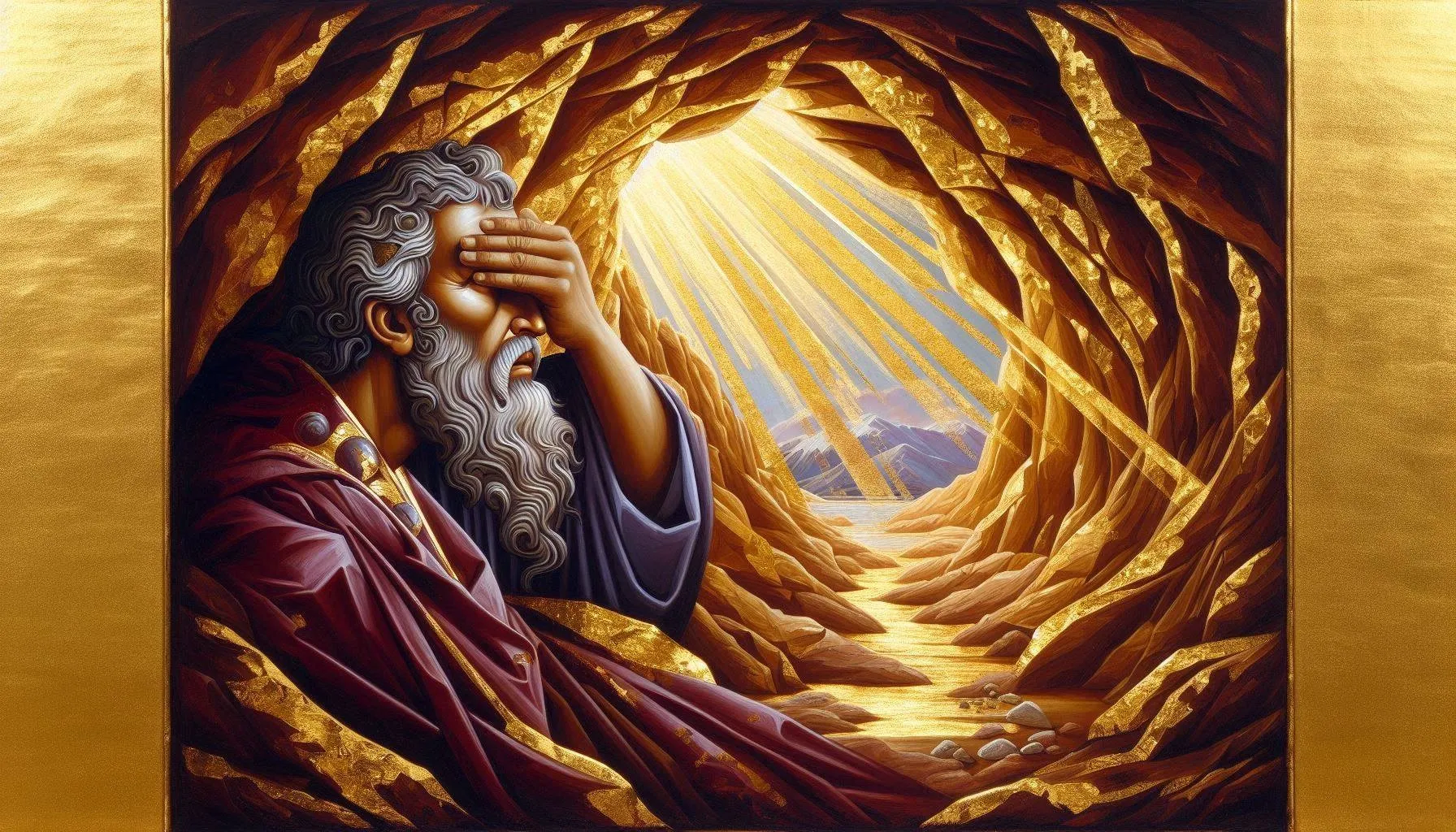
Scripture’s proof is a single man, shown both halves at once. Moses — who spoke with God “face to face, as a man speaks to his friend” (Exodus 33:11) — asks for more. “Show me thy glory,” he says. He wants the face, the essence, God as He is in Himself. And he is told no:
“You cannot see my face; for man shall not see me and live.” (Exodus 33:20)
Not the essence. Not even for Moses. What God grants instead is the energies — the glory as given, the trailing edge and not the fathomless depth:
“You shall see my back; but my face shall not be seen.” (Exodus 33:23)
He sets Moses in a cleft of the rock, covers him with His own hand while the glory passes, and lets him see only what remains after. The greatest of the prophets, pressed into a crack in the mountain, shielded by the very hand of God, is given the trailing edge of the glory and no more — the thing in itself withheld, the appearance granted. Not as a punishment. As the honest shape of things.
And here is what that trailing edge does to a man. Moses comes down the mountain, and his face has changed:
“Moses did not know that the skin of his face shone because he had been talking with God.” (Exodus 34:29)
The people are afraid to come near; he has to veil his face. He did not manufacture that light. He caught it. He had stood in the passing glory — in the energies, not the essence — and it left him radiant, a man giving off a borrowed brightness that was nonetheless truly shining from his own skin. This is the whole teaching in one face: the essence withheld, the energy received, and the one who received it transfigured.
Centuries later, three fishermen saw the same thing at full strength. On a mountain in Galilee, Jesus “was transfigured before them, and his face shone like the sun, and his garments became white as light” (Matthew 17:2). The Eastern Church reads that moment with great care: the disciples did not watch a new light switch on inside Jesus. They saw, for one unbearable moment, the uncreated light that had been there all along — the energy of God blazing through the humanity of Christ — and their eyes were briefly strengthened to bear what human eyes cannot normally survive. This is the Light of Tabor, and it stands at the center of Eastern theology precisely because it is essence-and-energies made visible: God unapproachable, and God shining on their faces, in the very same instant. Peter never got over it. Decades later he was still writing about it: “we were eyewitnesses of his majesty… we were with him on the holy mountain” (2 Peter 1:16, 18).
The ancient Church Fathers reached for one image to say what such a light does to a person, and it is the sharpest of them all. Take a bar of iron and thrust it into the fire. Before long it glows red; it gives off heat; it sheds light; it will even burn you — it has taken on every property of the fire. And yet it has not stopped being iron. It has not become the fire itself, has not turned into the fire’s own substance. It is iron, wholly aflame. That is what the energies of God do to a human being. Plunged into them, we are genuinely set alight — we shine with God’s own life, burn with His love, are made “partakers of the divine nature” (2 Peter 1:4) — without ever ceasing to be creatures, without ever becoming God in His essence. The East calls this by the Greek word theosis: not the drop dissolving into the ocean and vanishing, but iron in the furnace, glowing with a light that is truly the fire’s and truly not its own — taking on the properties of the fire, God’s own life and light, while keeping our person distinct.
Not yet His fullness
Notice what this means about everything we now receive. It is real, and it is partial. The light that reaches us is genuinely God’s — and it is also the trailing edge of the glory, the back and not the face, the borrowed brightness and not the unapproachable core. Even at our most graced, we live in the energies. The essence stays beyond.
But there is a next time. Scripture speaks of a day when the veil drops — not for one prophet in a rock, not for three men on a mountain, but for the whole creation at once. When God comes in His fullness at the end, the world itself is remade in fire:
“The heavens will pass away with a loud noise, and the elements will be dissolved with fire… But according to his promise we wait for new heavens and a new earth in which righteousness dwells.” (2 Peter 3:10, 13)
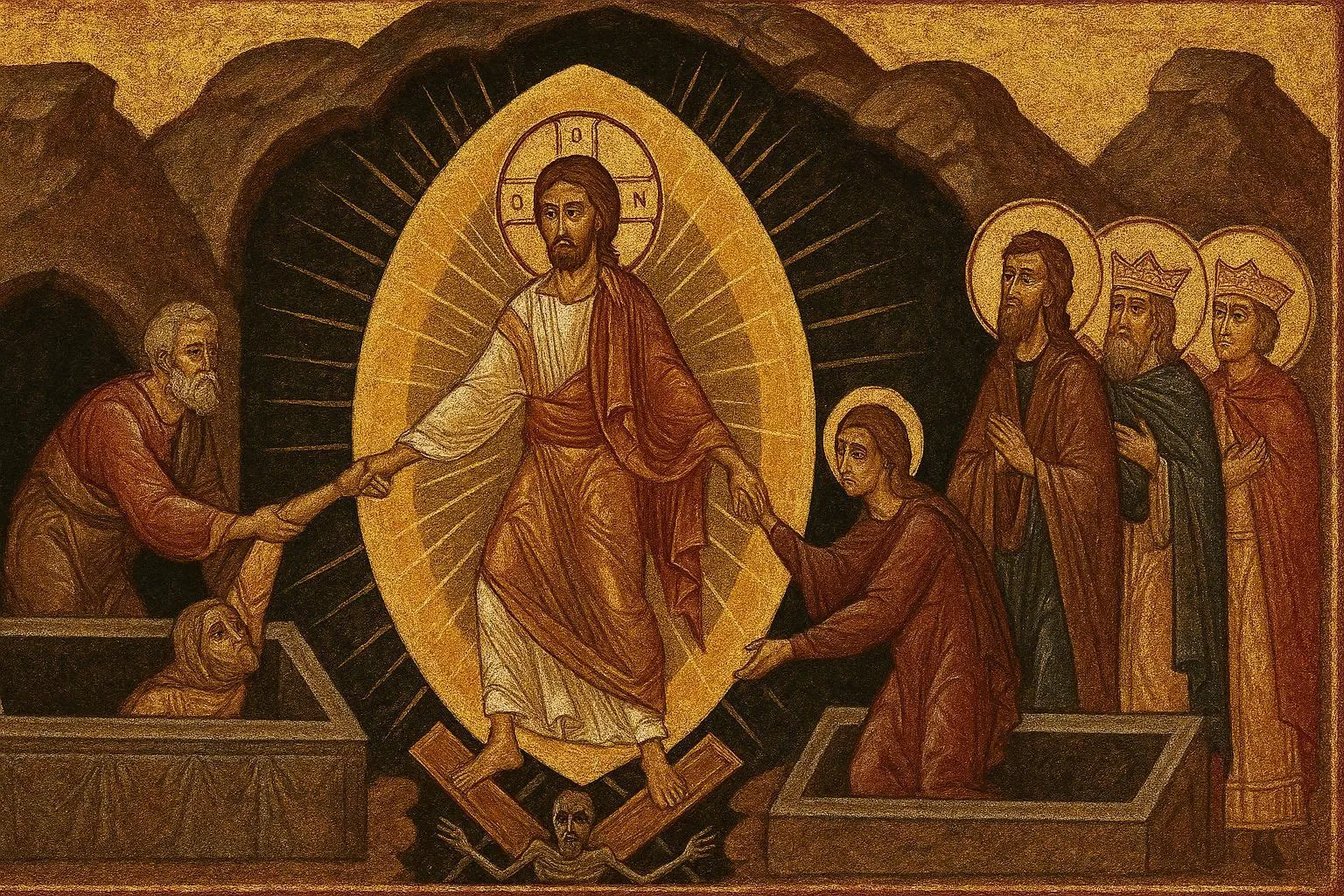
It is the same fire — uncreated, timeless. The energy that made Moses’ face shine, that blazed on Tabor, that sets the saints alight, is the energy that will at the last pass through the whole cosmos and remake it — the iron and the furnace, at the end, for everything that is. What we are given now in drops, all creation will be given then in full.
An old truth, and a later wall
One honest question remains. If all of this is true, why does it sound so Eastern? Why does the language of essence and energies feel like an Orthodox possession the West does not quite share? But that’s just the thing, the west has a Latin term for it too: deification; it just uses different terminologies to describe it. So why does it seem foreign?
The answer is mostly history — and it is worth telling straight, because it is usually told as a wall when it began as a shared inheritance.
The underlying intuition — a God unknowable in Himself who nonetheless gives Himself truly — is found in the Bible and in all ancient Christian traditions. It runs through the earliest Fathers, East and West alike. What happened in the fourteenth century, so the story goes, is that the distinction was drawn sharply, as a formal piece of theology, by a monk-bishop named Gregory Palamas. He was defending the monks of Mount Athos, who claimed that in the depths of prayer they genuinely experienced the uncreated light of Tabor. A learned philosopher named Barlaam ridiculed them: no one experiences God directly, he said; the most you ever get is created signs and symbols. To defend the monks, Palamas gave the old intuition its hard edges — the essence no one can reach, the energies truly given — and a series of councils at Constantinople (1341, 1347, 1351) upheld him.
While accepted by most Orthodox as dogma now, it’s worth noting that up until the time of Palamas this issue was rather irrelevant. The actual practice of continual prayer was something practiced only by the extremely pious at monasteries. The average layperson at the time — east or west — would most likely have scratched their head and said huh when asked about the essence-and-energies distinction; and the difference in trajectory of eastern theology and western theology — Plato vs. Aristotle — would likely not have been as pervasive an issue as we now perceive it to be.
Then came 1453. Constantinople fell, and for four centuries much of the Orthodox world lived under Ottoman rule. In that long night, Orthodox theology came to be carried above all by the monasteries, with metropolitan centers taking a back seat. Mt. Athos was chief among them and the Palamite distinction, born in a monastic controversy, settled into the heart of the surviving tradition. A conquered Church, pressed on every side, needed to define itself to survive against Muslim overlordship and inadvertently being absorbed by the remaining free Christian Patriarch of the original Christian Pentarchy, the Pope in Rome. And essence and energies became less a shared mystery than a badge: the thing that made Orthodoxy not Rome.
That polemical hardening is the “difference” we have inherited — and it hides how much was, and is, held in common. The Latin West says, with Aquinas, that no created mind can comprehend the essence of God in this life; it speaks of grace as a true sharing in the divine life, and of the blessed one day beholding God. The vocabularies are not identical, and real questions remain worth arguing with care. But the cartoon — cold rational West, warm mystical East — is more a product of the Ottoman centuries and Communist propaganda than it is of actual differences. The differences we now treat as ancient and essential were, for most of Christian history, far less divergent than they look from here.
And here the Byzantine Catholic stands as living proof. We hold the essence and energies of Palamas, and we do it in full communion with Rome. We are the standing evidence that this treasure was never meant to be a wall. It is simply two sides of the same coin, two lungs of the same church.
What God is, and what God is not
So — what is the nature of God?
He is not the being on the shelf, the powerful character you could find if you knew where to look. He is not the god with a chair on Olympus, here and therefore not there. Not the pantheist’s renamed universe, everywhere and no one.
He is the God whose essence you will never comprehend and whose energies you cannot escape — unapproachable light and the warmth on your face, at one and the same time. He hid His face from Moses and made Moses’ face shine. He cannot be seen, and yet He came down in person. He fills heaven and earth, and He can be called out by name.
The right response to such a God was never going to be a definition. You do not solve Him. You enter into Communion with Him — the way iron enters the fire. The saints are simply the ones who stopped trying to set God on the shelf and let themselves be set alight instead. That is the whole invitation of the Christian life, and it is why any of this matters: not to know about the unknowable God, but to be changed by the God who is nearer than your own breath — and, on that last day, when the fire comes for all things, to be found already blazing.