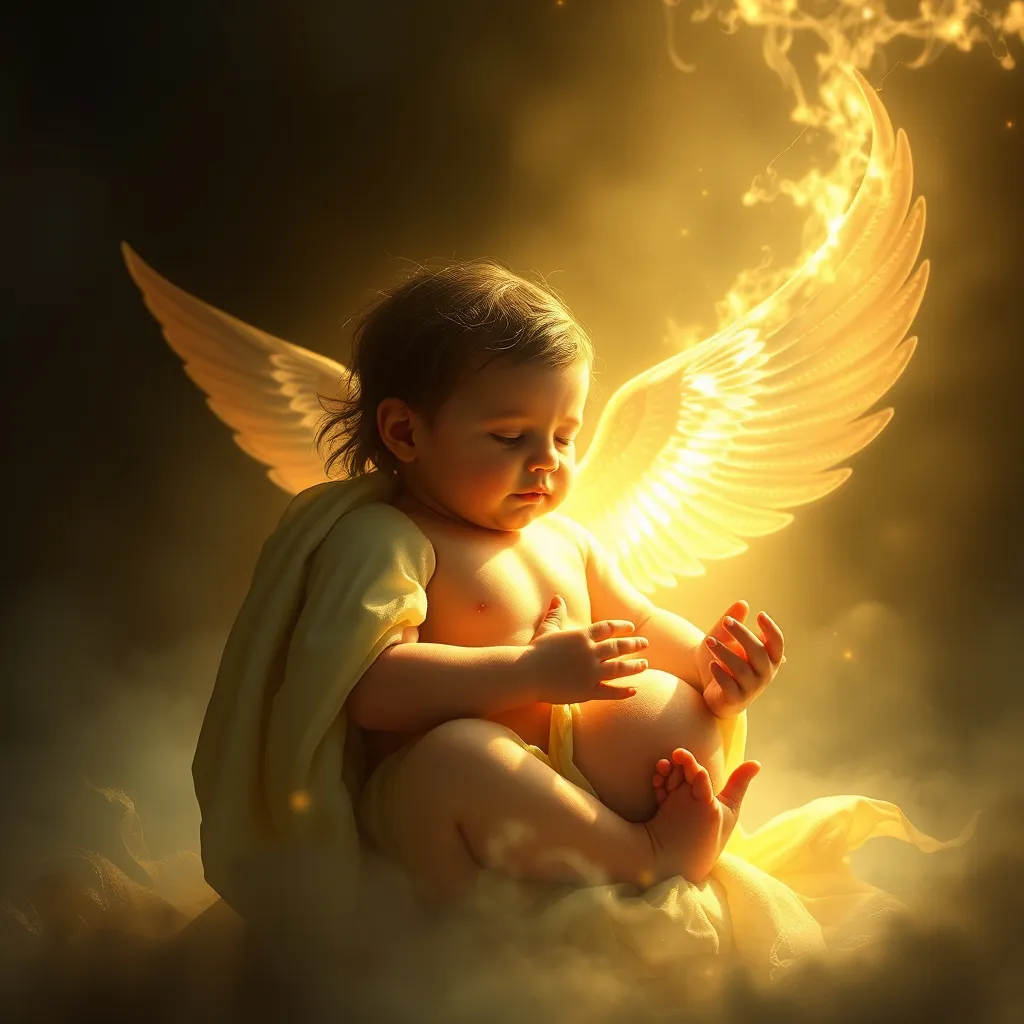
Almost a year ago, we lost a beloved member of our family, our pet bird.
She had done nothing wrong. She hadn’t broken any commandment. She hadn’t lied or stolen or coveted anything. She had simply lived her small life, eaten her seeds, sang her songs, and then, after a long battle with illness, she was gone.
If you have ever lost an animal, you know that the question rises naturally: why did this happen? Scientists say death and decay are just facts of life. Christians say that death came into the world through sin. The Apostle Paul writes it plainly: “as sin came into the world through one man and death through sin, and so death spread to all men because all men sinned” (Romans 5:12). Elsewhere, Paul tells us that “the wages of sin is death” (Romans 6:23). Many incorrectly understand this explicitly as — sin causes death, and I personally die because I’ve sinned and divine justice had to be fulfilled. But my bird didn’t sin. She wasn’t morally culpable for anything. So how can her death be the wages of sin? How is that just?
This question seems small, but it opens onto one of the most important and most misunderstood Christian doctrines: what exactly did humanity inherit from Adam? What does it mean that death came into the world through sin? Is death really a divine punishment for my sin? Does a loving God really want to punish us with death?
The answer, as it turns out, transforms how we understand the Christian life — and shows why the sacraments are not optional decorations but the very means by which God puts the world back together.
A Real-World Puzzle
“For the wages of sin is death” (Romans 6:23)
Begin with what we can observe. Animals die. They have always died, as long as anyone has been watching. Plants wither. Stars burn out. Mountains erode. The entire physical world is a vast, slow process of decay. The world is passing away.
If “death is the wages of sin” means that every death is divine punishment for a specific personal moral failing, then the doctrine doesn’t hold up. My bird hadn’t sinned. The leaves on the tree outside my window haven’t sinned. The ancient stars cooling in the night sky haven’t sinned. And yet all of them participate in the same condition of mortality and decay that humans do.
So whatever Paul means in Romans 5:12, he cannot mean that every individual death is a legal verdict on that individual’s personal moral failing. The verse needs to be read more carefully than that.
When we do read it more carefully, what emerges is something quite different — and quite beautiful in its own way.
What Romans 5:12 Actually Says
“Therefore as sin came into the world through one man and death through sin, and so death spread to all men because all men sinned.” (Romans 5:12)
Paul’s claim is that sin entered the world through one man, and through sin, death. The two came in together. Sin was the rupture; death is what spread through creation as a result of that rupture. Paul is not describing a courtroom verdict applied to each individual mortal creature. He is describing a cosmic condition that entered creation when humanity broke communion with God.
The very next chapter makes this even clearer. In Romans 8, Paul writes:
“For the creation waits with eager longing for the revealing of the sons of God; for the creation was subjected to futility, not of its own will but by the will of him who subjected it in hope; because the creation itself will be set free from its bondage to decay and obtain the glorious liberty of the children of God. We know that the whole creation has been groaning in travail together until now.” (Romans 8:19-22)
Read that carefully. The creation was subjected to futility, not of its own will. Creation didn’t choose this. The creation — animals, plants, the physical world itself — is in a state of corruption that it did not bring upon itself. It is in this condition because of something that happened to humanity, who was given authority over creation, and now creation groans, waiting for the day when it will be liberated alongside the children of God.
This is the bigger picture Paul has in view. Death is not a legal sentence applied person by person. Death is a condition — a state of corruption that spread through all of creation when humanity ruptured its communion with God.
Animals die because death is now the condition of creation. Not because they sinned. Not because they are being punished. Because creation as a whole has come under the same brokenness that humanity now lives in.
We Were Made for Incorruption
“For God created man for incorruption, and made him in the image of his own eternity, but through the devil’s envy death entered the world, and those who belong to his party experience it.” (Wisdom 2:23-24)
To understand what was lost, we need to understand what was originally intended. And the Book of Wisdom gives us the clearest statement found anywhere in the Bible.
Let those words sit for a moment. God created man for incorruption. Death was not part of the design. Humanity was made in God’s own likeness, and the likeness of God is not subject to corruption. Death is not natural to us. It is an intrusion — something that came into the world from outside the original creation, through the envy of the devil and the rupture of communion with God. Death need not be.
Wisdom develops this picture across its opening chapters. Chapter 1 puts the point as starkly as possible:
“Because God did not make death, and he does not delight in the death of the living. For he created all things that they might exist, and the generative forces of the world are wholesome, and there is no destructive poison in them; and the dominion of Hades is not on earth.” (Wisdom 1:13-14)
God did not make death. This is a stunning biblical claim, and it sits at the center of the Eastern Christian understanding of the human condition. Death was not God’s design. Death is not God’s punishment in the simple legal sense. Death is what entered creation when creation was severed from its source of life.
Wisdom 3 continues:
“But the souls of the righteous are in the hand of God, and no torment will ever touch them. In the eyes of the foolish they seemed to have died, and their departure was thought to be an affliction, and their going from us to be their destruction; but they are at peace.” (Wisdom 3:1-3)
The righteous are in God’s hand. Death cannot touch them in the way it appears to. Even though they seem to die, they are in peace. The body returns to dust, but communion with God — the thing that makes us alive in the deepest sense — is preserved and even deepened.
And Wisdom 4 makes explicit what the Byzantine Fathers later articulated more fully: the long life of the wicked is not really life, and the brief life of the righteous is not really death:
“For old age is not honored for length of time, nor measured by number of years; but understanding is gray hair for men, and a blameless life is ripe old age. There was one who pleased God and was loved by him, and while living among sinners he was taken up. He was caught up lest evil change his understanding or guile deceive his soul.” (Wisdom 4:8-11)
The Book of Wisdom is the closest Old Testament articulation of what we are about to draw out: humanity was made for life, made for incorruption, made for communion with God. Death is the consequence of separation from that communion. And reunion with God is the cure.
What Was Actually Inherited
So what does this tell us about what we inherit from Adam?
We do not inherit Adam’s personal guilt for his particular act. Adam ate the fruit; we did not. He bears the moral responsibility for that specific choice. We are not, in the strict legal sense, condemned for something we did not do. The Eastern Christian tradition has been careful about this point for nearly two thousand years.
What we inherit is the condition that Adam’s rupture produced. We are born into a world where communion with God has been broken at the root. We inherit:
- Mortality — our bodies are subject to death because they exist in a creation that has come under the dominion of corruption.
- A darkened will — the inclination toward sin, the difficulty of doing what we know to be right, the struggle Paul describes in Romans 7 (“I do not do the good I want, but the evil I do not want is what I do”).
- Separation from God — we are no longer born into automatic, unbroken communion with our Creator. The Garden has closed behind us.
- A wounded human nature — not a totally corrupted nature, but a nature that no longer functions as it was designed to function. Almost as if we were seeds planted in radioactive soil — someplace we ought not to be planted. As a result we grow twisted and gnarled, mutated even — away from our original image and plan.
This is what the Eastern Christian tradition has often called ancestral sin — the condition inherited from our ancestor Adam, rather than the personal guilt of his specific transgression. We are born into a broken world that has lost its connection to its source of life. We are born already sick.
This is why infants need baptism — not because they are personally guilty of Adam’s sin, but because they are born into the same condition of separation that we all are, and they too need to be united with Christ to be made whole.
It is also why the simple “death is punishment for personal sin” framing doesn’t work. Animals die because they live in a creation that has come under the condition of corruption. Infants die — and have always died — not because they sinned in their cribs but because the world they were born into is broken. The earth shakes and the storm kills the righteous and the unrighteous alike. None of this makes sense if death is purely a legal verdict. All of it makes sense if death is a condition that has spread through a creation severed from God.
The Garden and the Rupture
Read the Genesis story in this light, and everything shifts.
The original communion between humanity and God was not metaphorical. God walks in the garden in the cool of the day (Genesis 3:8). Adam and Eve are naked and unashamed — utterly open before God, utterly themselves, without the veils and defenses we now find necessary. They are not yet hiding. They are not yet covering. They are simply with God, in unmediated communion, as humanity was designed to be.
What changes in Genesis 3 is not primarily a legal status. What changes is the communion itself. Adam and Eve hide themselves in the trees of the world. They cover. They make excuses. They flinch from God’s voice. The relationship is broken — not because God has withdrawn, but because they have stepped back from Him. And the consequences cascade outward: the ground is cursed, childbirth becomes painful, work becomes toil, and finally, “you are dust, and to dust you shall return” (Genesis 3:19).
Death enters not as God’s vengeful sentence on a specific crime, but as the natural consequence of being severed from the source of life. To be united with God is to live; to be separated from Him is to die. Adam and Eve chose separation, and separation produced death — not as a courtroom verdict, but as an inevitable physics of the spiritual order.
You can see the same logic at work all through Scripture. In Deuteronomy 30:19-20, Moses tells Israel that God has set before them life and death, and that to “love the LORD your God, obeying his voice, and cleaving to him” is life. Not a metaphor for life — life itself. To be united with God is to live. To be cut off from Him is to die.
Christ Himself draws the same connection in John 17:3: “And this is eternal life, that they know you, the only true God, and Jesus Christ whom you have sent.” Eternal life is not primarily a duration; it is a communion. To know God is to live forever. To not know Him is already, in some sense, to be dead — even while the body still walks around.
The Sacraments as Healing of Communion
This is why the sacraments are not optional add-ons. They are not religious extras for those who like ceremony. They are the means by which God puts back together what was broken in Eden.
If the deepest problem of the human condition is broken communion with God, then what is needed above all is restored communion. The sacraments are precisely that — the concrete, physical, material means by which God reunites Himself to us in this present life. They might not be the only ways to restore communion. The Eastern Tradition doesn’t restrict it legalistically only to these. But they are the known methods given to us as a free gift of Divine Grace that can cause this restoration.
Baptism is where the rupture is healed at the root. We are united to Christ’s death and resurrection (Romans 6:3-5), buried with Him and raised with Him, and we come up out of the water no longer cut off from God but adopted as His children (Galatians 4:5-7). The Eastern Christian tradition describes baptism as the new birth — the moment when the deeper life that was lost in Eden is restored. We are no longer merely biological beings, alive only in the diminished sense that creatures cut off from God can be alive. We are now reconnected to the source of life itself.
Chrismation / Confirmation seals the gift of the Holy Spirit, completing what began in baptism (Acts 19:6).
The Eucharist is how that communion is sustained and deepened. Christ tells us plainly: “He who eats my flesh and drinks my blood has eternal life… he who eats me will live because of me” (John 6:54, 57). After the road to Emmaus, the two disciples told the others that they had recognized Christ in the breaking of the bread. The Eucharist is not symbolic refreshment — according to the Bible, it’s how we know and recognize Christ. It is the actual reception of Christ into ourselves, the actual continuation of the communion that began in baptism.
Reconciliation restores communion when our own choices have damaged it. We turn back from sin, name what has separated us from God thereby gaining power over it, and receive His forgiveness through Christ’s ministers — as Christ Himself instructed when He gave the apostles authority to forgive sins (John 20:23). This isn’t a legal procedure; it’s us actively participating in the healing of our own souls through Christ. In a way too it’s an opportunity for us to relive, and choose differently, that pivotal moment in Genesis when Adam and Eve hid their sin in worldly shame.
Anointing of the sick brings the healing communion to the body in its illness, recognizing that physical sickness is itself part of the cosmic condition of corruption, and that Christ’s healing extends to the body as well as the soul.
Matrimony sanctifies the union of two persons in a way that mirrors and participates in the deeper union of Christ and the Church.
Holy Orders consecrates men to be the living instruments through which the other sacraments flow.
All seven of the sacraments are, at root, sacraments of communion — moments and means by which the gap that opened in Eden is closed again, by which the life that flows from God reaches into our broken, mortal, separated existence and begins to make us whole.
The Need for Healing
“On either side of the river, the tree of life with its twelve kinds of fruit, yielding its fruit each month; and the leaves of the tree were for the healing of the nations.” (Revelation 22:2)
This brings us to the most important pastoral implication of the Eastern view, which is what the entire Bible builds toward. The healing of the nations. Because Revelation, the final book in the Bible, doesn’t end in brimstone and fire, it ends in healing.
If what we inherited from Adam is fundamentally a guilt — a legal debt that must be paid — then what we need most is a payment. The Christian life becomes primarily about getting the books balanced, about being declared not-guilty before a divine judge.
But if what we inherited from Adam is fundamentally a wound — a condition of broken communion with God that has spread through all our being and all of creation — then what we need most is healing. The Christian life becomes primarily about being restored, about communion being rebuilt, about wholeness being slowly, patiently, sacramentally recovered.
Christ Himself uses the language of healing more often than the language of legal payment. He calls Himself a physician: “Those who are well have no need of a physician, but those who are sick; I came not to call the righteous, but sinners” (Mark 2:17). He heals everywhere He goes — bodies, minds, souls, relationships. The early Church Fathers picked up this language and ran with it. They called Christ iatros — the divine physician. They called the Eucharist “the medicine of immortality.” They described the sacraments as therapeutic — not as transactions but as treatments applied to a wounded humanity.
This is the framework the Eastern Christian tradition has preserved from the beginning. Sin is a wound. Death is a condition. The sacraments are the means of healing. Theosis — full participation in the divine nature, full restoration of communion with God — is the goal toward which the whole Christian life is moving.
If this is right, then everything else in Christian theology shifts. What Christ accomplished on the cross is not primarily a legal payment to satisfy divine justice. What Christ accomplished is a healing — the restoration of human nature itself to what was always intended, the defeat of death – which only Christ could perform through death on the cross – from the inside, the opening of a way home for the wounded.
That, however, is the subject of another piece. For now, what matters is this: we were made for incorruption. We inherited a wound, not necessarily a debt. Death entered the world because communion with God was broken — and the whole of creation, animals included, now lives under the same condition. But the wound can be healed. The communion can be restored. The Garden, in some sense, can be entered again — through Christ, in the sacraments, by the slow patient work of grace, until the day when all creation is set free from its bondage to decay into the glorious liberty of the children of God.
That is the Christian hope. It is much greater than “not going to hell.” It is the recovery of what we were made for in the first place — incorruption and union with God. And it is on offer, now, to anyone willing to receive it.
Continuing the Core Faith Series
If we were made for incorruption — and inherited a wound rather than a debt — then the question becomes how the wound gets healed, and what that healed humanity actually looks like. The next article in the Core Faith series turns to Mary, the first human being to fully receive what the rest of us are now promised: the crown of incorruption itself.